
Full track re-setting
If the door came off both tracks, or a panel bent on the way down, the track itself may need to be pulled and re-set, which takes longer and sometimes means ordering a section that doesn't match what's on the shelf.
Pueblo, CO
Garage door jumped its track in Pueblo? See why 1960s-70s tracks and hard winters cause it here, what the repair actually involves, and what it costs.
Job timing
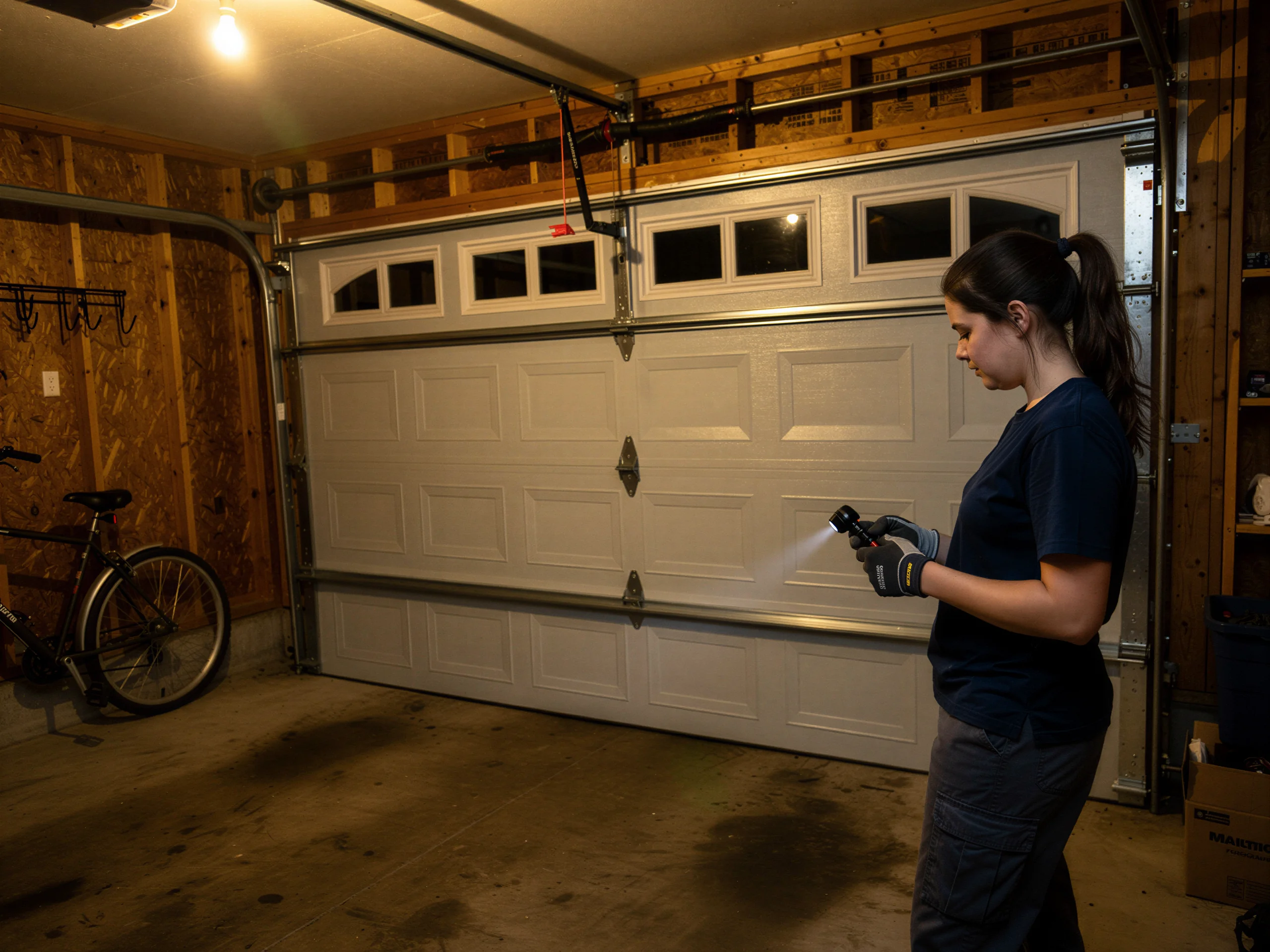
An off-track door is one of the few garage door problems we can usually size up before we even open the toolbox. If a roller popped out of the track on one side and the door is still hanging square, that's a bracket realignment and a roller swap - straightforward work once we're on site.
If the door came off both tracks, or a panel bent on the way down, the track itself may need to be pulled and re-set, which takes longer and sometimes means ordering a section that doesn't match what's on the shelf.
We won't quote a fixed number of hours here because it genuinely depends on what we find once the door is open - how bent the track is, whether the cable jumped its drum too, whether the opener forced the door against the stop a few extra times before anyone noticed.
What we can tell you is that most off-track calls in homes built across our service area's 1960s and 70s housing stock turn out to be the same failure: original steel track, decades of rollers wearing into it, until one cold morning something finally lets go. That pattern means we're rarely guessing at the cause once we're standing in the garage.
Pricing
We're not going to put a number on this page, because an off-track door covers a wide range - from a bent track section and a few rollers to a full track-and-hardware replacement if the door was forced or dropped. What drives the cost is what's actually bent versus what's just dislodged, and whether the panel itself took damage when it left the track.
Here's the honest part: on original 1960s and 70s track, once it's bent, it rarely bends back true. We can hammer a track section straight and get the door running again, but on older steel that's been flexing for decades, that fix tends to be temporary. We'll tell you straight when we think you're buying a patch versus buying a permanent repair, and let you decide which one makes sense for the door you have.
Local causes
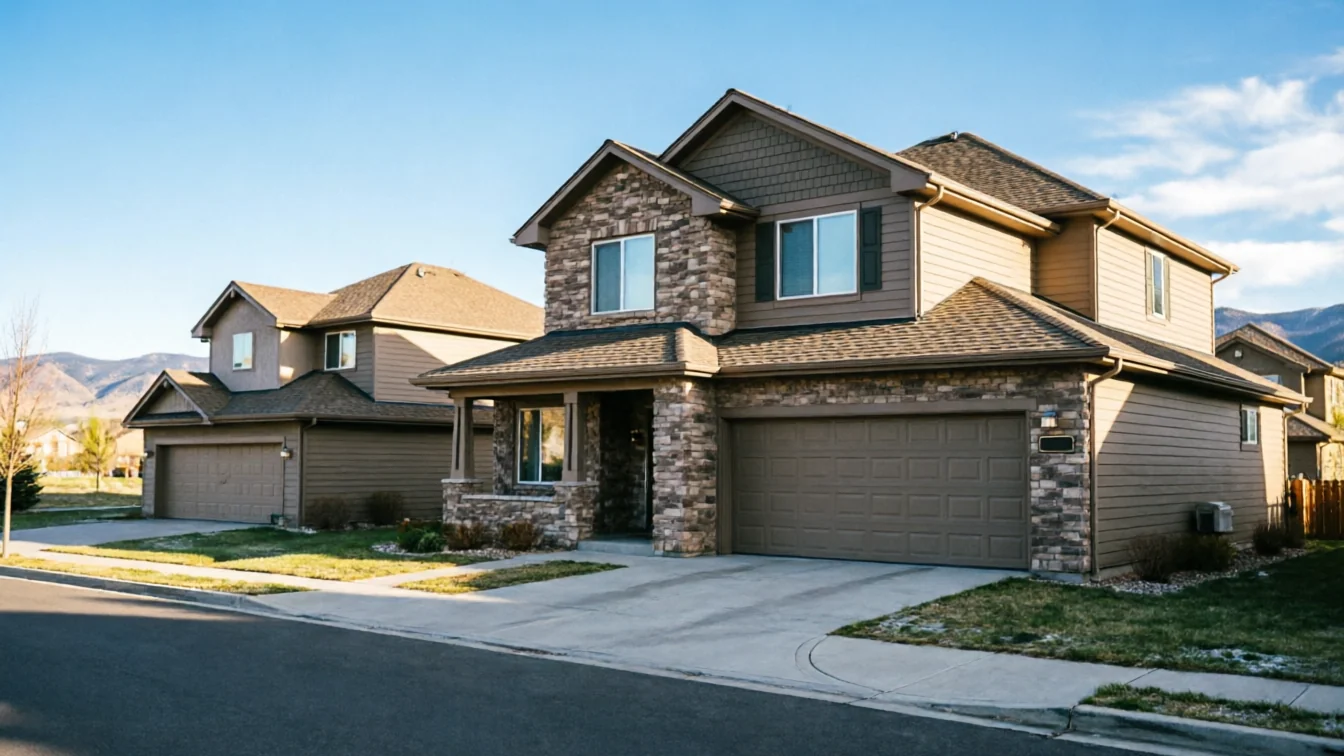
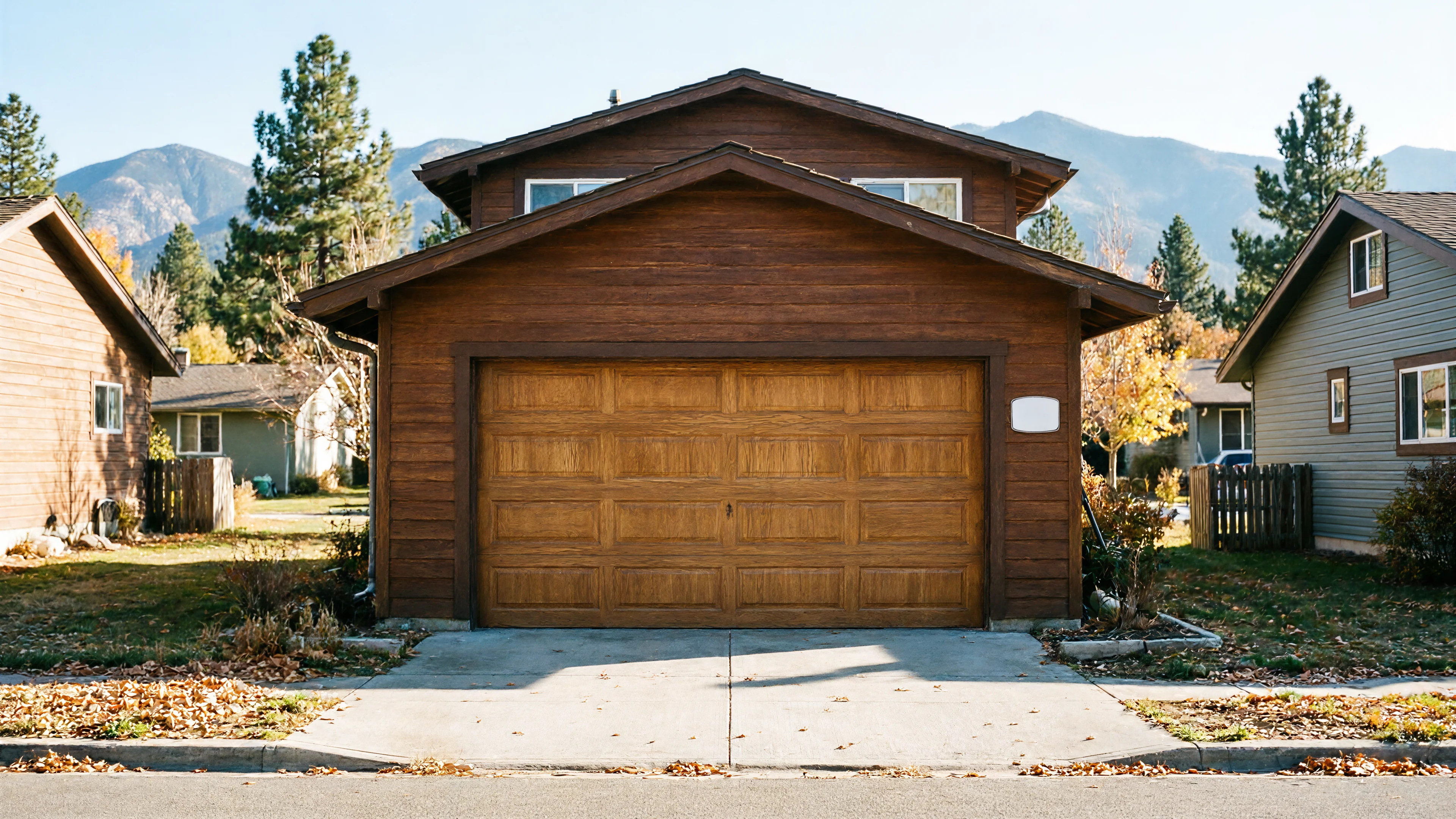
Most of the houses across our service area went up in the 1960s and 70s, and that era of garage came with steel tracks hung on brackets screwed straight into the house framing - no shimming, no adjustment allowance, built for a door and an opener that weighed less than what's hanging there now in a lot of cases. Fifty-plus years of rollers running the same groove wears the track wider than the roller, and a wider track means more slop before the roller finally jumps clear.
Our winters make it worse. This is a cold climate region with real swings, and the wood jamb behind the track bracket contracts and expands with every freeze-thaw cycle through the season. Screws back out a sixteenth of an inch at a time, the bracket shifts, and the track that was dead straight in October is pulling off-plumb by February. Add a broken cable or a slipped spring pulling the door unevenly - which happens more on an unbalanced door than people expect - and one side comes off the rail while the other side is still trying to close square. It's rarely one thing. It's old track, cold-weather movement, and a door that was already out of balance before it jumped.
Warning signs
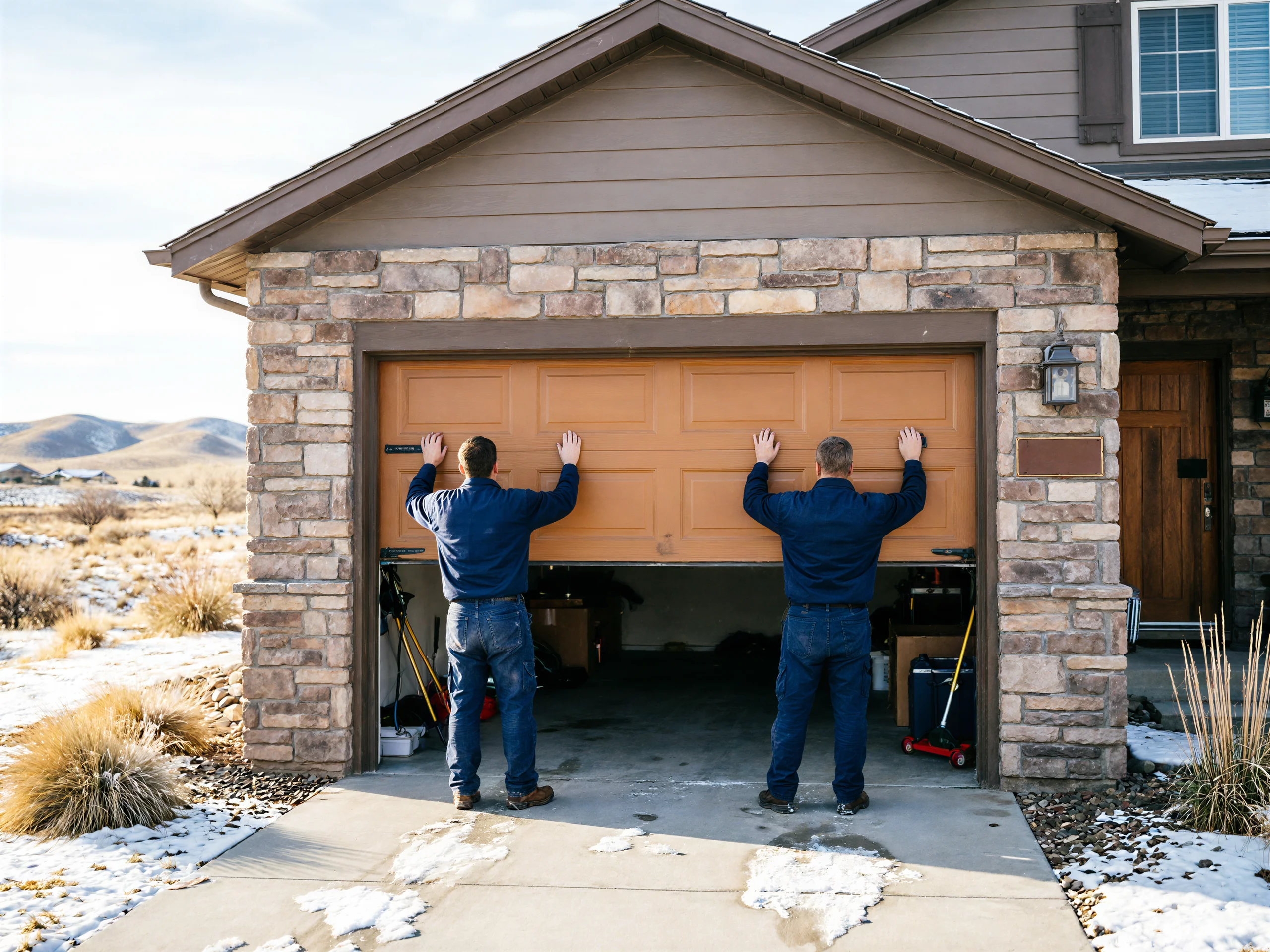
A door that's actually off track usually won't move at all, or it moves a few inches and binds hard. You'll often see one side of the door sitting lower than the other, or a visible gap where a roller has popped clear of the track channel.
Sometimes the door looks fine from inside the garage but the track is bowed outward where the roller forced its way through. If the opener is still trying to run the door, stop it.
Running the motor against a jammed or off-track door is how a bent track turns into a cracked panel, and it's how a cable under tension becomes a cable that snaps. If you can reach the opener's emergency release cord, pull it and leave the door where it sits until someone looks at it.
Don't try to force the door back onto the track by hand - on a door this old, the spring is still under load even when the door isn't moving, and that's not a safe thing to be leaning into.
Questions
We'd rather you didn't. Even when the door looks stuck in place, the spring is usually still under tension, and forcing a panel back into a bent track can snap a cable or bend the track further. Pull the emergency release, leave the door alone, and get someone to look at the hardware before anything moves again.
No. Plenty of calls are a dislodged roller and a loose bracket, which is a quick fix. The track itself usually only needs replacing if it bent on the way off, which happens more often on original 1960s-70s steel than on newer track.
Cold snaps here are hard on the wood framing behind the track brackets. The jamb contracts, screws back out slightly, and the bracket shifts out of plumb over a season. Combined with decades-old track on older houses, that movement is often enough to let a roller jump clear.
Explore more
Ready when you are
Pueblo Garage Door Pros repairs and installs garage doors, springs and openers in Pueblo, CO and the surrounding area.